
Will Pokemon Pokopia Be on Switch 1? Platform Guide
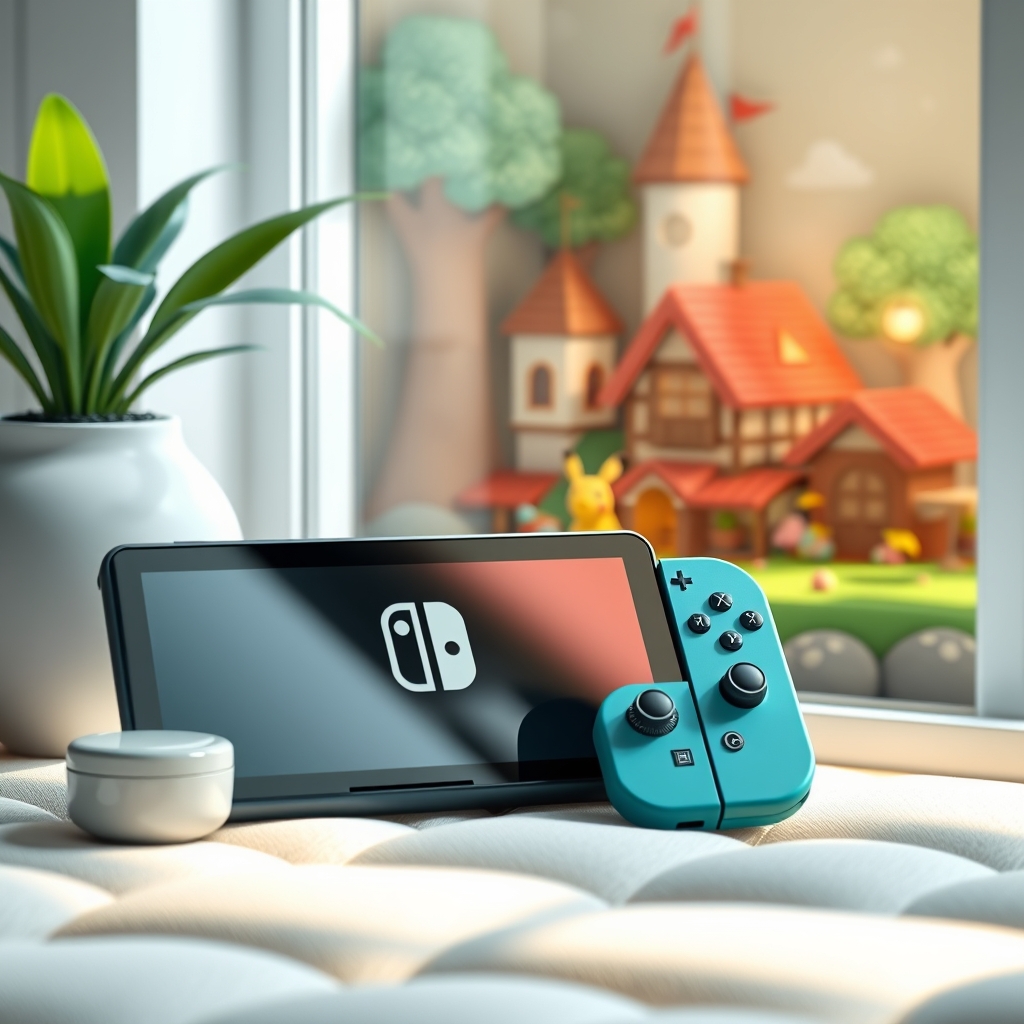
As rumors, industry leaks, and official announcements surrounding upcoming Pokémon projects continue to emerge, fans around the world are evaluating what hardware they will need for future releases. Among the titles generating community discussion—specifically cozy life-simulation and world-building concepts emerging from developer leaks—one question dominates player forums: will pokemon pokopia be on switch 1?
Understanding whether original Nintendo Switch consoles (including the original 2017 model, Switch Lite, and Switch OLED) will host future franchise installments requires a close look at Nintendo's platform strategy, historical patterns, and technical requirements.
Understanding Pokémon Pokopia: What We Know About the Concept
To understand platform compatibility, it helps to look at what Pokémon Pokopia represents. Leaked documents, trade filings, and internal development summaries point toward a title centered on town-building, habitat management, and cozy life-simulation mechanics within the Pokémon universe. Unlike mainline RPGs that focus heavily on competitive battling and linear route progression, a life-simulation project relies on dense environmental interactions, persistent world state tracking, and complex NPC behaviors.
While The Pokémon Company maintains tight confidentiality around unreleased titles, community interest in a dedicated cozy game has grown significantly following the success of titles like Animal Crossing: New Horizons and New Pokémon Snap.
Historical Strategy: How Game Freak Handles Console Transitions
To answer whether will pokemon pokopia be on switch 1, we have to look at how Game Freak and The Pokémon Company historically handle hardware transitions. The Pokémon franchise is famous for maintaining support for legacy platforms far longer than most third-party developers.
- Nintendo DS Era: Pokémon Black 2 and White 2 launched on the Nintendo DS in 2012, more than a year after the Nintendo 3DS had already hit store shelves.
- Nintendo 3DS Era: Pokémon Ultra Sun and Ultra Moon released for the 3DS family in late 2017, several months after the original Nintendo Switch launched worldwide.
- Switch Generation Transition: Announcements such as Pokémon Legends: Z-A explicitly targeted the existing Nintendo Switch family, demonstrating a commitment to the massive installed base of over 140 million Switch units worldwide.
Historically, Pokémon development teams prioritize maximum audience reach over cutting-edge graphical performance. Because the install base of original Switch hardware is enormous, releasing a title exclusively on next-generation hardware creates a financial trade-off that executives consider carefully.
Technical Hardware Limits: Switch 1 vs. Next-Gen Requirements
When considering will pokemon pokopia be on switch 1, processing power and memory allocation become critical factors. The original Nintendo Switch relies on an NVIDIA Tegra X1 processor paired with 4GB of LPDDR4 RAM—specs that were mid-tier at launch in 2017.
For a cozy life-sim or sandbox title, hardware demands differ from traditional turn-based RPGs:
- Object Density: A game focused on custom decorations, dynamic habitats, and freeform placement places heavy loads on system memory (RAM).
- AI Simulation: Managing dozens of autonomous Pokémon roaming, interacting, and responding to environmental triggers requires ongoing CPU processing cycles.
- Draw Distance & Load Times: Open town areas without hidden loading screens strain the original Switch's memory bandwidth, often resulting in texture pop-in or variable frame rates.
If the scope of Pokémon Pokopia relies on heavy physics interactions or persistent world rendering, developers must decide whether to scale down visual fidelity for Switch 1 or build exclusively for stronger successor architecture.
Cross-Generational Possibilities and Backward Compatibility
Many community discussions regarding will pokemon pokopia be on switch 1 center on whether the title can adopt a cross-generational release strategy. Modern console transitions frequently utilize cross-gen builds, allowing a game to run natively on legacy hardware while unlocking enhanced framerates, higher resolutions, and faster loading on newer systems.
Nintendo has established strong framework support for digital purchases and cloud save migration across system revisions. If Pokémon Pokopia is built on an adaptable engine, a dual-release model remains a strong possibility:
- Base Version (Switch 1): Optimized for 720p/1080p target resolution at 30 frames per second, with reduced dynamic shadow complexity and lower draw distances.
- Enhanced Version (Next-Gen): Native higher resolution, 60 frames per second options, instant load times, and denser environmental assets.
This approach allows developers to tap into the existing market of original Switch owners without capping the visual ceiling on newer hardware.
Platform Feature Comparison: Switch 1 vs. Successor Hardware
Decision Guide: Should You Upgrade Hardware for Pokémon Pokopia?
Ultimately, evaluating will pokemon pokopia be on switch 1 comes down to individual player expectations for performance and graphical fidelity. If you currently own a Nintendo Switch, Switch Lite, or Switch OLED, here are practical factors to help guide your planning:
- If You Value Accessibility First: Stick with your current hardware for now. Given historical franchise patterns, major titles typically maintain legacy support or cross-gen compatibility whenever viable.
- If You Prioritize Performance: Preparing for next-generation hardware ensures you experience optimal frame stability, minimal load times, and maximum visual detail.
- If You Play Exclusively Handheld: The Switch Lite and Switch OLED remain capable handheld devices for lower-intensity simulation mechanics, provided developers offer scalable settings.
Monitor official announcements from Nintendo Direct presentations and official Pokémon Presents broadcasts for definitive release confirmations and system specs.
Related Articles
 Gaming
How to Check If Your Laptop Can Run Any Game (Step-by-Step)
September 3, 2026 Gaming
Is Google Play Games on PC Laggy? Causes and Quick Fixes
September 3, 2026 Gaming