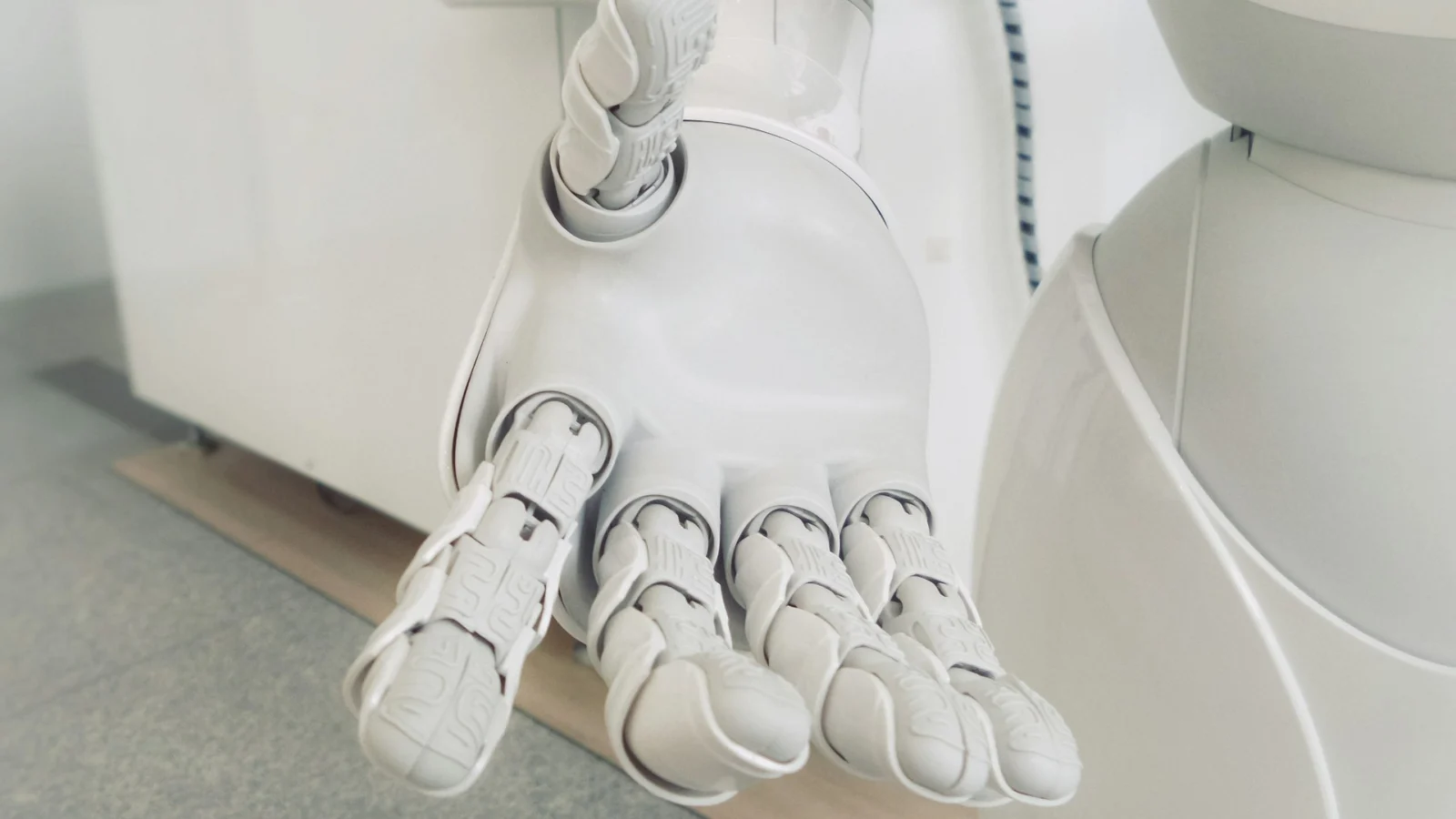
Watch someone take an egg out of a carton and you will not notice anything remarkable. Their fingers find the shell, adjust grip strength without thinking and lift it clear in under a second. For a robot, the same movement combines several of the hardest open problems in engineering: perception, force control and adapting to things it has never touched before.
That gap matters because hands are how machines will be useful outside factories. A robot that can only move rigid boxes along a fixed path is limited. A robot that can fold laundry, sort mixed parcels or hand a tool to a nurse needs dexterity that looks less like a gripper and more like a hand.
The hardware is no longer the main obstacle
For years, robotic hands were either strong and clumsy or delicate and fragile. Newer designs use lightweight actuators, tendons that run through the fingers much like our own, and joints that give slightly under pressure. That compliance is important: a finger that yields a little is far more forgiving when the robot misjudges an object’s position.
A finger that yields a little is far more forgiving when the robot misjudges where an object is.
Touch is the missing sense
Most robots still grasp mainly by sight. Cameras can estimate an object’s shape, but they cannot feel whether it is slipping or how soft it is. Tactile sensors in the fingertips, some using small cameras that watch a gel surface deform, give the controller a stream of contact information it can react to in milliseconds.
Learning instead of programming
Writing rules for every object is impossible, so researchers increasingly let robots learn. Two approaches dominate: reinforcement learning in simulated environments, where a virtual hand practises millions of attempts, and learning from demonstration, where people guide the robot through a task with a glove or remote controller.
Both have limits. Simulations never capture friction and deformation perfectly, and demonstrations are slow to collect. The most promising work combines them, using real-world data to correct what the simulator gets wrong.
What to expect next
Dexterous robots will appear first where conditions are controlled: sorting in logistics centres, handling samples in laboratories and assembling small parts. General household helpers remain further away, because homes are cluttered, poorly lit and full of objects that differ from one another.
Comments